Showing posts with label Garden Journal. Show all posts

Sunday, August 5, 2012

Biodegradable Seed-Starting Pots out of TP Rolls

After seeing a few pictures of this online, I decided to try it myself.  I usually use the traditional plastic cell-packs in a seed-starting greenhouse (see here on seed starting).  However, I am always looking for ways to get away from using plastic as much as possible in all aspects of my life, including gardening.  Also, it's always my goal to have as few inputs as possible into our gardening efforts, closing the loop as much as is feasible.  One way I might be able to close that loop a little more is through using our empty toilet paper rolls as seed-starting pods instead of ever investing in plastic cell packs again...  and the best part is, they're biodegradable!  I can just plant the whole pot, and let them break down in the soil.  See tutorial below on how to make your own.  

Start with a clean, empty TP roll.
From here, shmush the roll down to fold it in half so that it has creases running down the sides.  The unfold and shmush it down so that the existing creases meet in the middle.  When your done, it should have taken on a square shape like the picture below.  
If you want more defined folds and to save your hands a little effort, you can also use a ruler on a hard surface to give the roll a hard crease.  
 Now, you want to cut up the creases on the bottom of the roll just enough to make flaps that reach halfway across the opening of the roll.  All rolls are a slightly different size, so I am not bothering to give an exact measurement.  For example, the fluffy stuff Derek had here originally had much wider rolls than the Seventh-Generation I replaced it with...  kudos to Seventh Generation for giving us less empty space.  

Fold the flaps so that they are creased across right where the slits end (like pictures below).  
Finally, fold the flaps as you would if you were trying to close a cardboard box by interlocking the flaps, as pictured below.  
 You can make a whole bunch in just a short time!
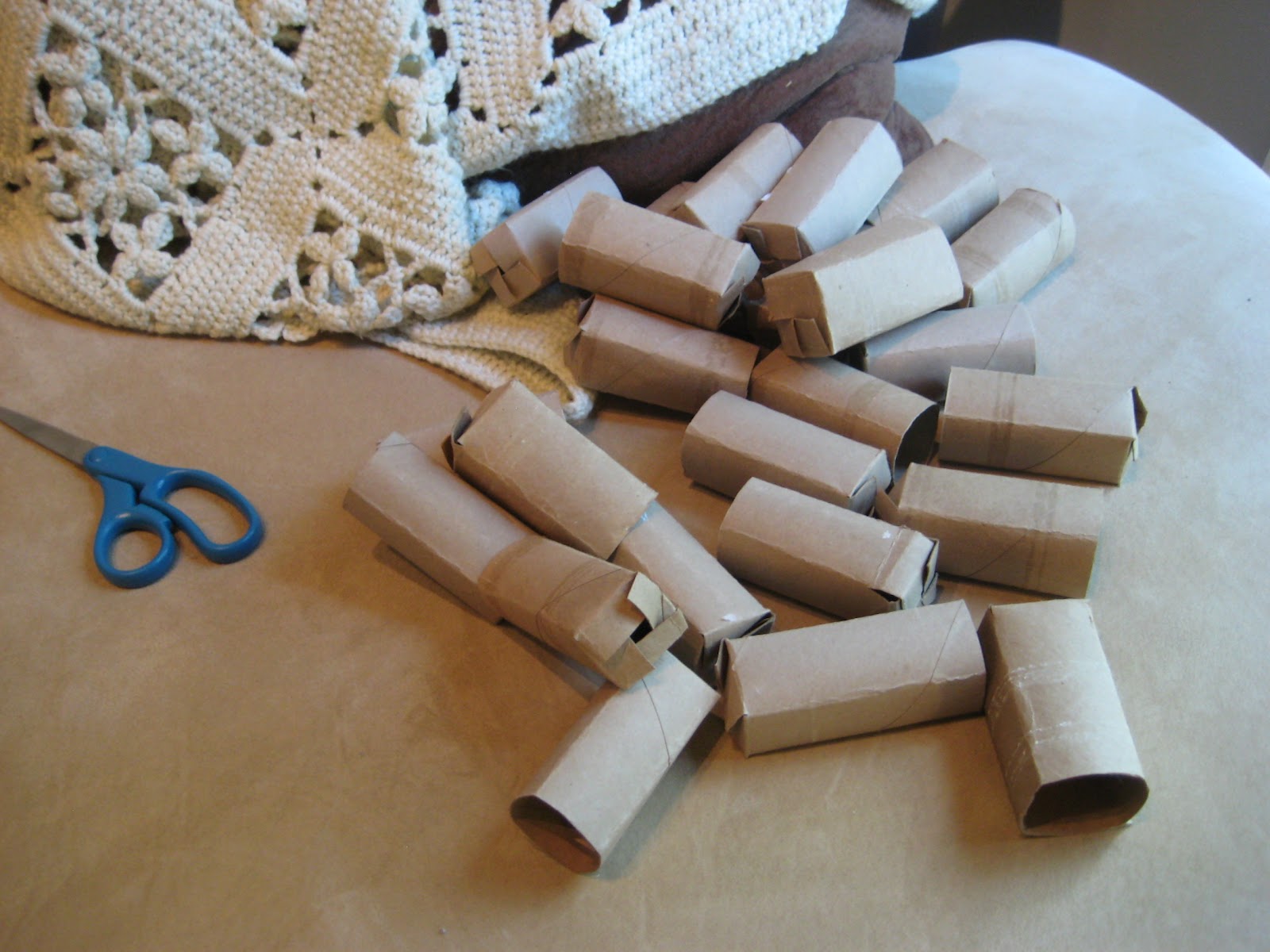
 
And they'll stand up to fit in your seed-starting trays right along with those old cell packs...  And then when your plants are ready to go outside, you can bury the whole things in the ground, and it will break down on its own.  
~*NOTE:  I have not yet planted these, so I'll let you know what the positives/drawbacks are once I know.  However, similar to peat pellets, I would recommend that you be sure to bury the lip of the roll completely under the soil line, or else it could act as a wick, drying out the roll-pot, and thus, your plants.  *~

Sunday, July 29, 2012

Summer Garden Tour

This year's summer garden went in a little late because of the transition to the new locale, but it is now in and thriving!  Cherry tomatoes, okra, and cucumbers are just starting to put out...  But melons, peppers, eggplant, sweet potatoes, corn, beans, pumpkins, and other tomatoes are still to come!  Check it out in the slideshow below.  I'll be sharing more details on how each one went in and how it's doing as the season progresses.

Sunday, October 2, 2011

Falling out of Summer Garden

Cooler temperatures have arrived here in Raleigh and the summer garden is quickly coming to a close as I begin to transition in my fall crops.  I am loving the fall weather but am still hoping for a few more warm weeks to ripen my remaining tomatoes and peppers and, most especially, melons.  Check out the slideshow below to see what fruits are still hanging on from this summer and what young plants are taking their place as we fall out of the summer garden...

Tuesday, September 20, 2011

Ode to Boothby's Blonde

I wanted to take this time to honor my favorite garden producer of the summer...  my Boothby's Blonde cucumbers.  Early this summer, I dreamt of a beautiful cucumber trellis, made of interwoven bamboo, arching between two of my curbside beds.  Boothby's Blond did NOT disappoint.  Not only were they healthy, vibrant climbers even in the melting North Carolina summer heat, they were also my best producer of the summer garden so far!
Take note of it's thin yellow skin...  Unlike green cucumber varieties that are past their prime when they turn yellow, these are at their peak when they turn a bright lemony yellow.  The skin is also thin enough that there is no need to peel!  Unlike with some cucumbers, you won't be left chewing on woody skins and seeds.  One aspect that is a little strange to get used to and is not pictured here is that they also have small black spines, which makes for a wild contrast with their yellow skins.  Don't worry, they rub off easily!
Also note here their melon-like flesh...  These are crisp and juicy.  No need to scrape out the seeds.  You won't even notice them.  
A big thanks to Seed Savers Exchange, my source for Boothby's Blonde cucumber.  I'll definitely be saving these seeds and planting again next year.
http://www.seedsavers.org/Details.aspx?itemNo=916

Wednesday, May 18, 2011

Manure Garden!

The garden looks beautiful now with a fresh layer of manure on it, so I just have to show it off!  I hate when gardening books and magazines show a background of dark, rich, bare soil with bright accents of green plants.  It looks so good, but I would never want to leave my soil bare for too long, or I would quickly lose valuable nutrients, and my rich, moist, dark soil would start to look like a dry, gray wasteland very quickly.  Oh, and it has headed in that direction in times of neglect.  My garden rarely looks like that, more often being a mess of layered grass and leaf mulch.  But over the last few days, after a fresh load of manure, and then a nice gentle rain, covered in a shower of mustard blossom petals, I think, for now, it's magazine quality.

Soil Management:
It's generally best to amend your soil at least once in spring and once in fall and then add other nutrient boosters throughout the season.  I hadn't yet gotten around to major soil amendment this spring, so it was long overdue.   Here is a list of my most common soil management strategies:
  • Mulching:  As mentioned above, I try to keep a thick layer of mulch on my garden at all times.  This will reduce soil erosion and therefore nutrient loss as well as reduce water evaporation from your soil.  Keeping my garden moist in the hot North Carolinian summers would be impossible without a thick layer of mulch.  I try to layer nitrogen-rich green mulches (i.e. grass clippings) with more carbon-rich brown mulches (i.e. leaves) so that the mulch will also continuously break down and add to my soil.  You can also see a layer of straw on my strawberry beds in the slideshow, mainly because I got it for free from Halloween party leftovers last fall.  That is probably my main requirement for mulch, that it be FREE!  
  • "Fertilizer":  My worms generally provide all the "fertilizer" I need.  I generally try to put a scoop of worm dirt in with new transplants when they first go in the ground.  If I'm direct planting from seed, I put a scoop in the ground between each seed, since too much fertilizer on young seedlings can "burn" them.  Additionally, I dilute worm "juice" or "tea" that drains off the worm bin and either water with it or spray it on my plants as a foliar feed.  
  • Compost:  The worm compost mentioned above is produced in much too small of quantities to put a layer on the whole garden, and it is much more nutrient-dense than "regular" compost.  Therefore, I also keep a compost pile out back for non-worm-friendly kitchen waste, leaves, and garden waste.  This produces larger quantities that I can use to put a layer on my entire garden.  
    • NOTE:  Diseased or pest-infested garden waste should either go in the trash or should be composted in a separate pile not to be used on the garden.  
  • Manure:  I've now had a couple of different sources for manure.  I used to find it on Craig's List, but this time my friend Genna helped me dig it from a horse farm near her house.  I loaded up the Cavalier, lining the trunk with tarps and filling big tubs.  This gave me enough to put about two inches over the whole garden.  I hope to soon cover it with a layer of leaf mulch, but for now, it looks too beautiful!

Sunday, April 3, 2011

Take a walk through the spring garden so far...

The spring garden is still young, but filled with an exciting array of crops already! Check out the beautiful reds, purples, yellows, and greens in the pictures below.

Tuesday, February 15, 2011

Cold Frames 101

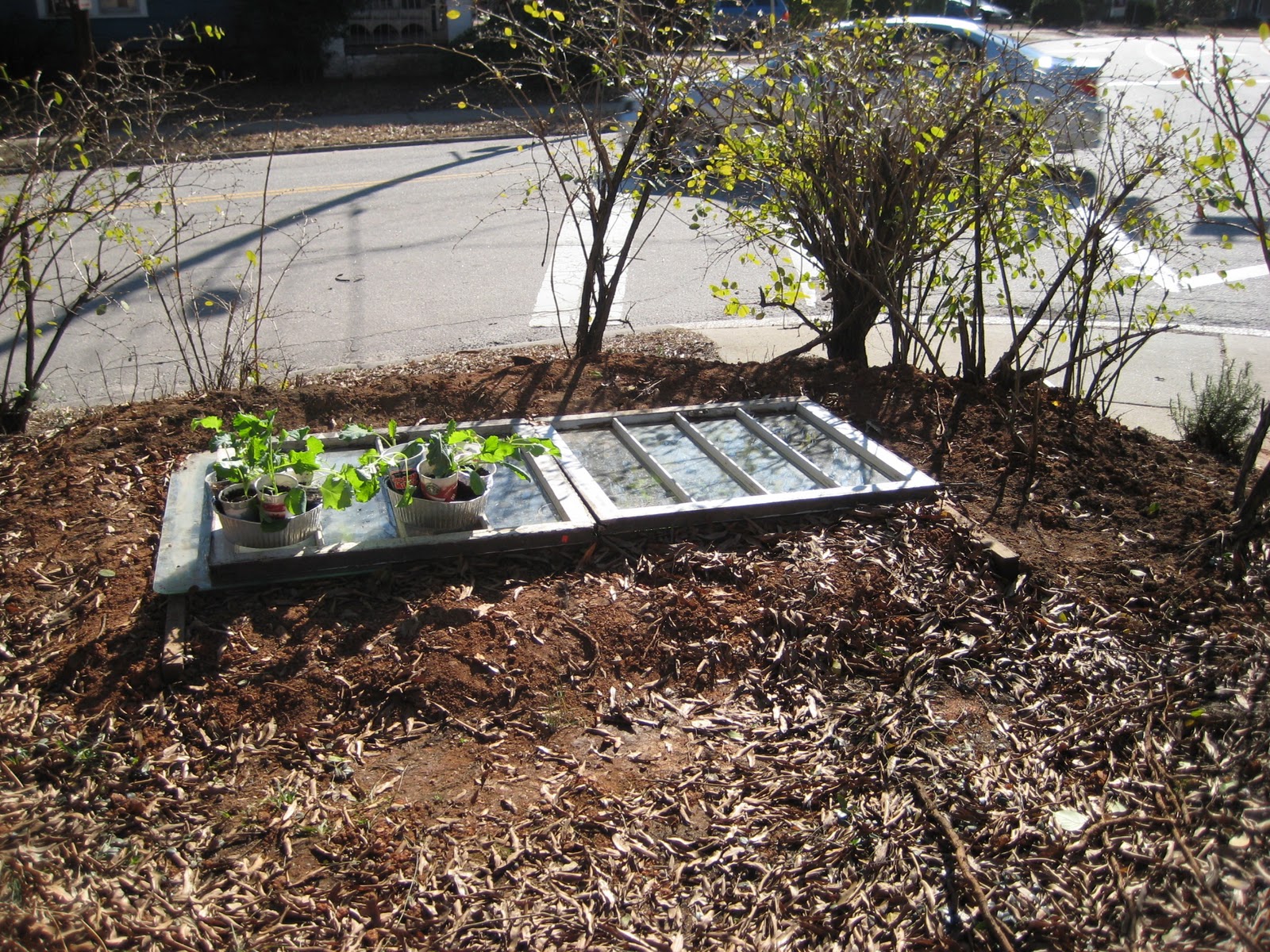
We are back in the garden now with a brief overview of cold frames and of my recent cold frame building experience (see photo below).  I was hoping to get this cold frame built last fall, but early Carolina cold spells stopped my fall season short.  So of course, the first sunny day of this February, I was out in the front yard digging.  One good day of digging and drilling will hopefully give me a big jump start on my spring (and later summer) gardens.  Can you tell I'm in a hurry to get started this season?  
What is a cold frame?  
A cold frame is basically a wooden box with some kind of clear glass or plastic on the top.  Some people even build them out of straw or hay bales rather than out of lumber.  

Why use a cold frame?  
Using a cold frame allows you to extend your gardening season in several ways.  In the fall, you can plant root vegetables and hardy greens for harvesting throughout winter, and in spring, you can harden off plants in it earlier than frosts would allow directly in the garden.  

How does it work? 
 The glass allows the sunlight and warmth to come in through the top.  That warmth and warmth from the ground is trapped in the frame enough to raise the temperature inside the frame, protecting plants from frost, even late into fall and winter and early in the spring.  

How did I build mine?
My cold frame is a fairly make-shift version with minimal investments in new supplies (big surprise), but I'm very pleased with the final result.  I'm not going to get very technical here with dimensions and technique because honestly, I didn't get that technical when building it.  
-Materials:  I had some scrap lumber discovered in the back yard, some wood screws bummed off of my constructionally-inclined roommate, and a couple of great old windows purchased at the Scrap Exchange, a reuse material store in Durham for those of you in the area.  
-Frame construction:  The wooden frame was just built by constructing my scrap wood into a rectangle and attaching the boards with the wood screws using a power drill.  
-Putting it all together:  From there, I used an edging shovel to outline the wooden rectangle in the yard where I wanted my frame, then dug out a rectangular hole in the ground about 10 inches deep.  The wooden frame was then placed on top of the newly dug whole, and the excess dirt built up around it to eliminate any gaps between frame and ground.  Finally, my windows are just laid on top of the frame for now.  I may add hinges later, but for now, this is working just fine.  

Important note:  Cold frames are often just laid on top of the ground at ground-level rather than dug into the ground.  Digging the frames into the ground to the depth of mine can risk flooding after big rains or melting snows, particularly if your frame is at a low point in the yard.  However, I chose to dig my frame into the ground to this depth to add the height needed to place larger seedlings in it without having to purchase extra wood to build my cold frame taller.  I don't foresee much of a flooding risk, as my frame is at a high point in the yard, and we don't get a lot of big melt outs here.  

Finished Product!
Below you can see the frame open with many early spring seedlings in there being hardened off before heading out to the garden.  By being out in the cooler temperatures of the cold frame between the warmth of the indoor grow lights and the chill of the open garden, they should be much more hardy and resistant to cold spells once out in the garden.  Before transitioning the seedlings from cold frame to the garden, I like to let them set out during the day for a couple days (as you can see in the first picture above).  

Also inside you can see that I have placed some old broken mirrors around them to reflect more sunlight onto the plants as well.  Finally, I encountered a few large tree roots in my digging, which, for now at least, are happily coexisting with my seedlings.  
Alternatives to cold frames?
If you want something more serious, a greenhouse is always an option.  But if you are looking for ways to get your plants out a little early with something simple and inexpensive/free, try just covering plants with makeshift cloches.  Instead of purchasing expensive (yet admittedly more attractive) glass cloches, try using clear plastic bottles with the bottom cut off to secure around your newly-planted tender seedlings while frost is still a risk.

Thursday, February 10, 2011

The seedling factory...

I think I have been more systematic about my seed starting this spring than ever before, and so far, it's paying off.  Using lessons learned from many past failed attempts and new tips and ideas from my winter reading, I've set up a pretty serious seed-starting operation.  Not to mention, due to an absent roommate, we have an extra room this spring with an ideal south-facing window that I've taken the liberty of transforming into my own quasi-greenhouse.

Here's an overview of the steps I've taken (as mentioned in the previous post, with every step for every variety documented in the gardening journal).
  • Presprouting:  Presprouting your seeds before planting them has a few advantages over just planting directly in the soil.  (1) You can quickly see which seeds are viable, and avoid the effort and space involved with planting any seeds that will not sprout.  (2) Presprouting moves the germination forward a few days faster, with seeds generally germinating within a couple of days of planting after presprouting.  So, how to?  This year, I've been trying a new method.  As pictured to the right, for this method you want to wet a paper napkin (about as wet as a damp sponge), put it on the bottom of a clear plastic container, sprinkle your seeds on it, and then seal.  When you see your seeds sprouting, it's time to plant!  Very convenient and a great way to reuse those pesky plastic containers before recycling them.*  
*With most bigger seeds, presprouting is a great option, but very small seeds (like thyme, for example) are much too delicate to presprout and get into the soil without damaging them.  
  •  The Germinator:  This is both the name of the organic seedstarting soil I've used this year as well as what I like to call the domed structure to the right.  It's important to use sterile soil, so either buy special seedstarting mix or make your own, just be sure to sterilize it in the microwave or oven.  Plant your sprouted seeds in the seedstarting mix and cover with about as much soil as the diameter of your seed. Keep your soil very moist until the seedling emerges.  I like to use the plastic dome method to the right for this part, but as soon as the seedlings are up (as pictured below), I take them out of this environment which is much too damp and lacking in air circulation to keep seedlings healthy.  
    • Under the Lights:  Once seedlings are up, I move them under the lights (pictured to the right)...  My low-cost and low-consumption alternative to purchasing new grow lights is to purchase a few used desk lamps at local thrift stores and outfit them with CFL light bulbs.  These lamps, surrounded with mirrors and aluminum pans to reflect the light and in front of a bright, south-facing window, provide enough light to keep my seedlings from getting spindly.  I also keep a fan blowing low on them from a couple of feet away in order to increase air circulation (decreasing risk of disease and dampening off), to strengthen stems, and to get them more hardy and ready for the chilly early spring outdoors.  I keep lights just a couple of inches above the seedlings, readjusting as they grow, and rotate seedlings regularly to keep them from leaning too far in one direction toward the light.  The seedlings are watered daily, keeping them as moist as a wrung-out sponge, with just water, as fertilizer might "burn" them at this early stage of life.  You can see a sampling of what's growing so far below.  
    • Indoor Transplanting:  Between when the seedlings have produced their first true leaves (beyond the cotyledons they produce when they first emerge) and their second set of true leaves, it's time to transplant them to a bigger container with more fertile soil (see to the right).  For this purpose, I like to reuse disposable cups, collecting them from friends that may have forgotten their travel mug for their morning java.  ;)  I punch a few holes in the bottom, and fill with a mix of worm compost and potting soil (about 1/3 worm compost).  Then, gently untangle seedlings, putting each in its own new, upsized home.  From there, I start fertilizing every other watering with diluted worm tea (about 1/4 cup to 5 gallons water).  They stay under the lights for a while yet before heading outside, but the youngest seedlings get to hog most of the light.  
    Next up: Making our way outdoors...  to the cold frame!

    Wednesday, February 9, 2011

    Seeds! Where to start?

    Just a quick note on where to get seeds before we jump into my efforts at seed starting.  With the many stores, websites, and seed catalogs out there, it's easy to get overwhelmed with where to go for your seeds and what varieties to choose.  Below are a few key things to consider when purchasing seeds as well as a few of my favorite places to get them...
    1. Plant for Flavor and Beauty.  Plant things you will actually eat.  It's also a bonus if they'll add some nice color or texture to your beds (especially if your garden is on the curb, like mine).  But don't let this stop you from experimenting with things you've never tried before.  
    2. Plant Heirloom.  Try heirloom varieties!  This helps to maintain biodiversity by keeping many forgotten strains of fruits and vegetables growing in our gardens, avoiding the dangers of monocropping.  It's also really fun!  Experimenting with the many beautiful and sometimes strange varieties out there definitely beats the usual same-old, same-old at the supermarket. I love Seed Savers.  Getting their catalog (see pic to the right) each spring is like getting the toy catalog before Christmas when I was little.  
    3. Plant Regional.  Consider planting varieties that are known to do well in your region.  See previous post on books that will help with this.  If I hadn't done this, this Ohio girl may never have discovered okra...  so sad!
    4. Plant local.  Bypass the big box stores for a local garden center.  This will not only better support your local economy, but also, they will be able to provide a lot more advice and assistance on what to plant in your area and when to do it.  My favorite in this area for all of you in the triangle is Logan's Trading Co.  

    Tuesday, February 8, 2011

    Planning and Journaling

    Every gardening book I've read has recommended starting a gardening journal.  I finally did this past year, and I think it makes a big difference in my approach to the garden.  I have a place to compile all of that valuable information I read in gardening books and magazines.  I am much more conscious of my planning efforts. When things go poorly, I have peace of mind in knowing that I'll write down what not to do for next year to avoid making the same mistake twice.  That's not to say I am always the best at keeping up on my notes throughout the year, but I'm definitely improving.

    Here's an overview of what I keep in my notebook:
    • Notes:  These include notes on what I am doing and what I plan to do.  Don't pay attention to my impeccable handwriting here...  I try to keep my bright ideas all in one place...  as well as any notes on what/when I plant, harvest, diseases or pests that arrive, etc.  I also am sure to make very clear notes to myself for next year about what I should do differently.  In the back half of the journal, I keep more general notes from books and magazines about what I should be doing.  
      •  Garden Diagrams:  I drew this incredibly spatially accurate map (right...) of my garden and yard in the front.  I retrace it to make maps of water flows, where and when the sun shines, and (most importantly) what I plant where each season.  This helps me to avoid planting the same family of crops in the same place year after year...  and it helps me plan where things will go.  
        •  Planting Schedules:  These look a little different each season.  Sometimes they are organized enough to take the form of a spreadsheet, but other times they barely get scribbled in a margin somewhere.  My most recent spring planting spreadsheet has the name of the seed variety, the brand, when I bought it, when I presprouted it, when it germinated, when it was transplanted, and notes on what should/shouldn't be done again next year.  


          That's about it!  I keep a combination of electronic and written formats, but often print off the electronic and staple them into my journal.  Any format works.  The most important thing is finding a method that makes it easy for you to keep up with it.

          My favorite part of keeping the journal is that I can start "gardening" long before I can get outside to plant a thing!

          Now that all my plans are made, I can begin seed starting...  my favorite part of the year.

          Monday, February 7, 2011

          Winter Reading

          Once the garden gets going in the spring and summer, it's hard to find time to read about gardening...  but when the winter cold has you trapped inside with no green in sight, that's when I find myself pouring over the gardening books dreaming of spring.  

          So what have I been reading this winter to prepare for the spring?  Check out a couple of old standbys below and one new fun addition:  
          Old Standbys:  *
          • Month-by-Month Gardening in the Carolinas:  This reference has been very helpful to me as an Ohio native attempting to learn when to do what in my exploits as a now southern gardener.  It offers overviews of what you should be doing each month, dividing it between all types of gardening (i.e. vegetables, annuals, bulbs, lawn, shrubs, etc), but I pretty much only use the section on vegetables.  I like to keep a sticky note in the month I'm in at all times for a quick reference...  it helps me not to get ahead of myself or fall behind, my two biggest gardening struggles.  
          • Guide to North Carolina Vegetable Gardening:  This reference gives a general overview of most common vegetables to grow in NC, with recommendations for varieties that do well in my area as well as recommended planting times and common pests/diseases for this region.  I like to cross-reference planting directions on seed packets with what it says here.  I think you can get this book and the one above for just about any state/region.  I got the Georgia versions of both as a gift for my brother in Atlanta.  
          *  One drawback on both of these is that they are written more from a conventional (rather than organic) gardening perspective.  I use them as a guide to the region, but forgo their advice when it comes to things like soil building, fertilizing and pest control.


          Favorite New Addition:
          • The Urban Homestead:  Derek got me this for Christmas, and I love it!  It goes way beyond just gardening, discussing everything from homemade cleaners to sourdough bread...  all geared toward making your lifestyle more self-sustainable and sustainable in general.  I love the parts on gardening and find it a refreshing innovative approach to a lot of common tasks.  
          So how dos we transition from all of this information gathering to action?  Next up are planning and journaling...

          Friday, January 21, 2011

          Spring is Coming!

          It's been a while since my last post.  The holiday fervor took over where the garden left off!  But, I am getting ready again now for another spring.  Let's catch up!

          Last fall, I was a little behind on getting my fall crops started, and the winter weather was a little ahead of schedule for North Carolina.  In short, my grand ideas for my fall garden never came to fruition.  The garden was never empty, but it wasn't exactly teeming with life.  A few mums, peas, beats, and Brussel sprouts were planted, and a few summer crops lingered on...  but little came of either.
          On to the next season!

          Over winter break, I've started getting ready for my spring garden, and the disappointment of fall is turning into excitement and a fierce resolve for spring!  How, you may ask, could I possibly be preparing for a spring garden when snow seems to have covered the ground here more often than not over the past month?  Over the next week, I'll outline the following things that have all been a part of my spring preparation...
          • Gardening Books - review old favorites and seek out new and innovative new reads.  Compile the most useful and pertinent information.  
          • Gardening Journal - catch up on anything that should have been noted in the fall, and start your scheduling and planning for this spring.  
          • Seed Starting - start your spring crops early indoors! 
          Let's get started.

          Monday, July 19, 2010

          Going a fruiting...

          My roommates and I have been on the hunt for fruit hanging in public (or "semi-public") spaces lately...  This began with blackberry season down here, and since then, we've also found mulberries, wild apricots and plums.  Figs are next.  The pictures below are just the beginning.  We've dried plums on the roof...  I've made apricot butter and blackberry jam...  as well as a few other recipes that will be following in future posts!  

          Saturday, July 10, 2010

          Seed Saving Efforts!

          We've made a big effort this year to make seed saving a regular part of our gardening efforts.  I've tried to minimize inputs (and thus also cost) to have the garden be as self-sustaining as possible.  Seed saving is one strategy we've implemented to "close the loop."  It's pretty simple and easy and altogether pretty fun.  

          For starters...  we've started letting at least a couple of each type of plant go to seed.  So... we have blooming lettuce, cabbage, radish, beets, etc. that form seed puffs or pods that we later collect and crack open to get the seeds out.  We are also sure to save a few pea pods or bean pods to be able to replant the peas/beans the next year.  

          For any of these seeds, we let them dry out completely before collecting them and putting them in envelopes.  

          For envelopes...  we've started saving some of our "junk mail" envelopes by tearing off one of the short ends, taking out the contents, and reusing them as seed envelopes.  (This is also good because a lot of curb-side recycling programs won't take your junk mail envelopes unless they are opened up).  Then just label them with the name of the plant and the year.  
          Now, all you need are the seeds.  So far...  I've saved easy things like the little onions off of the tops of Grandma's Egyptian Walking Onions...  
          Or teeny tiny seeds from the pods of this cabbage plant...


          Next year, when it comes time to plant them, we can put them in water to see which seeds are viable. Those that sink are generally viable, and those that float generally are not.

          Now, to us, it's like a whole new part of the harvest!

          Friday, June 18, 2010

          Shoots Update - How does my garden grow?

          Like my library books and movie rentals, updated pictures of the summer garden are long overdue.  I haven't posted pics of the garden for quite some time...  Needless to say it has changed a LOT from the spring planting pictures earlier this season.  Here in NC, I can generally get at least three separate plantings into three seasons.  My spring planting has already yielded beets, cabbage, peas, lettuce, carrots, strawberries, green onions, herbs, and copious amounts of kale and kohlrabi.  I'm still transitioning from some spring crops, but my garden is quickly filling with a second planting.  So here is a long overdue overview of my transition to my second season garden!

          Tuesday, May 25, 2010

          Aunt Mae's Birds

          This post is for a very special fella that we know by the name of Slick Action Jackson.  Amanda showed me this nest of birds in her front yard so I took a little footage of the lil' suckers for her nephew Jack.  I also took a little film of a bird in my front yard recently and thought that fit here as well.  Enjoy!

          Baby Birds:


          A Bird in the Yard is Worth Two in the Sky:


          and then...  she's like...  what?

          Friday, May 7, 2010

          Week of Kohlrabi!

          Once again this year I have more kohlrabi ready to eat than I know what to do with. Last year I was giving it away, hosting kohlrabi-themed dinner parties (kohlrowdy night), and making whatever I could think of out of it. This year, things are a little more complicated... The crop that is ready now was planted last fall, and most of it is bolting (going to flower) instead of forming the ball at the base of the stem that you normally eat. So really, I have more kohlrabi greens than I know what to do with and a few small swollen stems to eat.  Therefore, this week on Shoots and Platters will be "Week of Kohlrabi" with new kohlrabi recipes appearing almost daily.  But first, a quick primer on kohlrabi...
          • What part do you eat?
            • In the picture above, the part most commonly eaten and the part you would get in the grocery store is the swollen ball at the base of the stem (where all the leaves are coming out).  It will come trimmed of all stems and leaves when you buy it in the store.  This part is normally larger, but, as noted above, mine are not producing as well as hoped.  Luckily Derek and I both have another spring-planted crop coming in a few weeks.
            • You can also eat the leaves and stems, which I generally try to do rather than throwing them on the compost heap.  I highly recommend them.  It's best to strip the leaves from the stems, and then slice and cook the stems longer than the leaves, as they can be a little tougher.  
          • What does it taste like?
            • To me, the stem part tastes like broccoli stems (which are also edible and delicious and shouldn't be thrown out), but maybe sweeter and more tender.  Some people say it tastes like water chestnuts or even apples, but I don't think I'd go quite that far.  
            • The greens are similar in texture and flavor to kale or collards (or broccoli or cauliflower leaves -also edible), and generally pretty mild and tasty.  
          • How do I use it?
            • Of course, this is what the next week of posts is about, so more to come here.  In general, the swollen stem is peeled and eaten in any number of ways, in curries, slaws, salads, you name it!  The leaves can be saut
          • What if I don't have access to Kohlrabi?  Should I just ignore this week?
            • No!  The kohlrabi in these recipes can be substituted in a number of ways if you can't get it (but I do of course encourage you to try to find it and/or grow it).  As noted above, the stem is similar to texture and taste to peeled broccoli stems, so that is a perfect substitute.  The greens can be substituted with kale, collards, chard, whatever you have.
          • Other fun facts about Kohlrabi...
            • Kohlrabi is a cruciferous vegetable, in the same family as broccoli and cabbage...  It's also called a "German Turnip".  The first time I had it was actually in Germany when my friend peeled it, sliced it, and boiled it in bouillon.  Not bad.  It's really easy to grow from seed, but most garden centers by me are carrying it in transplant form in spring and fall these days.  It comes in a purple variety (pictured above) or green.  I'm growing both.  It grows fast and easy and is subject to the same pests as cabbages and broccoli.  
          Let the Week of Kohlrabi commence!  

            Spring has sprung, and it's about to fly away...

            A few weeks ago, while trimming our bushes, I discovered a bird's nest with four little blue eggs in it.  I now understand what "robin's egg blue" means.  :)  I've been monitoring the eggs ever since.  I take pictures of them from time to time, but mama does not like that very much.  She squawks and squawks at me whenever I go over there.  As soon as I'm gone, she's back to flying and forth to the nest again with tasty treats for all of them.  So far we have a 100% success rate!  All four eggs have hatched, and all four little birds are still there, but everyday they get more feathers (last pic is most recent), and everyday we're closer to them flying away! Check them out...

            Thursday, April 22, 2010

            Happy Earth Day Everyone!

            I just wanted to take some time before Earth Day is officially over to contemplate some of the ways we can celebrate our earth through food, since that is really what this blog is all about.  Here is an Earth Day bouquet for you, freshly picked form our back yard.  ;)
            And here are a few Earth Day recommendations for places to go for more information on food, the earth, and you:
            • Jamie Oliver TED Talk on Food - Great talk about the problems with food in our country and the effect it's having on all of us, especially kids.  
            • FRESH the Movie Trailer - Just saw this for the first time tonight!  Very similar to Food, Inc. (below), but a more of a focus on the great non-industrial food alternatives out there.  
            • Food, Inc. Movie Trailer - The go-to movie for information about the problems with our current food system and alternative ways to grow food.  
            • Michael Pollan Website - If you like the movies above, he'll fill in the details for you.  Pick up any book he's written to get started.  

            Monday, April 12, 2010

            My Dreams Come True

            I have literally been dreaming about harvesting carrots at least once a week for the past couple of months. Generally, in the dreams, I find these beautiful carrots growing somewhere that I had forgot I had planted them. I've been growing a small patch of carrots in my garden since last fall, but past attempts to pull them have yielded very tiny carrots. I left them over the winter and tried to forget about them so that I could wait to pull them at full size. Well, today, I couldn't take it any longer, and I pulled up four or five of them. Some are an orange variety, and others are purple... All are a little funny looking, but at least they've finally made my carrot dreams come to life. :)